
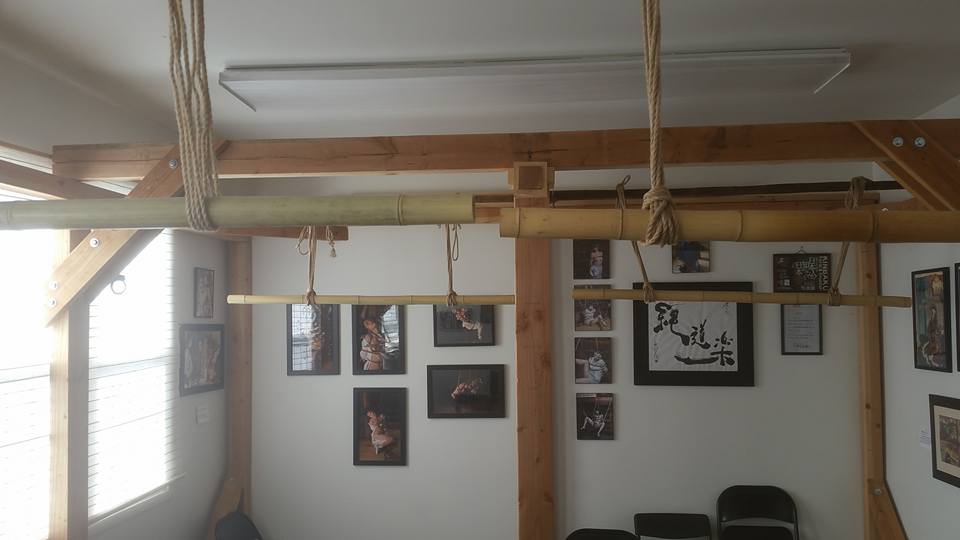
 Have you been curious about rope, but unsure how to begin?
For many people, the first step into shibari can feel intimidating. Maybe you have seen beautiful rope images online. Maybe you are interested in bondage, sensation, intimacy, or Japanese rope aesthetics, but you are not sure what kind of class is right for you. Maybe you do not have a partner. Maybe you have never touched rope before. Maybe you are simply curious.
That is exactly why we created Rope Curious at LA Rope Dojo.
Rope Curious is a welcoming beginner class for people who are interested in shibari, rope bondage, or kinbaku, but have little or no experience. You do not need to know any knots. You do not need to bring a partner. You do not need to arrive with confidence. Curiosity is enough.
What Is Rope Curious?
Rope Curious is designed as a gentle introduction to rope in a low-pressure environment. This is not a suspension class, an advanced technical workshop, or a performance class. It is a first step into rope as communication, sensation, connection, and play.
In class, we cover the foundations that every rope student should learn before moving into more complex tying:
- Basic rope safety
- Consent and communication
- How to talk with a partner before tying
- Rope handling
- Simple beginner-friendly ties
- Solo practice options
- How to participate at your own comfort level
The goal is not to overwhelm you with complicated patterns. The goal is to help you feel more comfortable with rope, your body, your boundaries, and the basic language of tying.
Who Is This Class For?
Rope Curious is ideal for complete beginners.
This class is a good fit for:
- People attending their first rope class
- Solo students
- Couples who want a gentle introduction
- Friends exploring together
- People curious about shibari, bondage, or kinbaku
- Anyone who feels nervous, unsure, or simply wants a supportive place to begin
You are welcome whether you want to tie, be tied, practice on yourself, observe, ask questions, or simply get a feel for the space.
Observation is allowed. Partner work is optional. Solo practice options will be available.
No experience. No partner. No pressure.
Do I Need a Partner?
No.
Many people assume they need a partner to begin learning rope, but that is not true. Rope Curious includes solo-friendly exercises and beginner ties that can be practiced on yourself. If you come alone, you will still be able to participate meaningfully.
You may also choose to observe parts of the class, practice rope handling, or work with another student only if that feels comfortable and appropriate. There is no expectation that you arrive with a partner or pair up with someone you do not want to tie with.
What Will We Learn?
We begin with the most important foundations: safety, consent, and communication.
Before rope becomes a knot, it is an agreement. We will talk about how to negotiate a rope scene, how to communicate comfort and discomfort, and how to use simple check-ins before, during, and after tying.
We will also introduce basic rope safety, including how to avoid common beginner mistakes, how to recognize warning signs such as numbness or tingling, and why safety shears are an important part of rope practice.
From there, we move into hands-on rope handling. You will learn how to find the bight and ends of the rope, how to move rope through your hands, how to manage tension, and how to begin tying with care and intention.
The ties themselves will be simple, beginner-friendly, and grounded. We are not trying to rush into dramatic shapes or advanced restraint. We are building the foundation.
A Small Map of the Rope World
One of the things we discuss in Rope Curious is that rope is not one single practice.
Some rope is decorative, focused on beauty, shape, texture, and how rope frames the body. Some rope is affectionate and connective, sometimes called aibunawa, where the emphasis is on closeness, attention, and emotional communication. Some rope is technical, focused on structure, precision, and body mechanics. Some rope is made for performance, photography, or stage.
Rope can also explore power, vulnerability, eroticism, restriction, or intensity. In Japanese rope contexts, you may hear the word seme, which can refer to pressure, torment, or ordeal. That kind of rope can be meaningful for some people, but it requires skill, trust, negotiation, and experience. It is not where we begin in Rope Curious.
In this class, we stay with the foundations: safety, consent, touch, communication, and simple ties.
You do not need to decide what kind of rope person you are. You only need to begin.
What This Class Is Not
Rope Curious is not a suspension class.
We will not be lifting anyone in rope, partially or fully. We will not be doing advanced ties, high-intensity rope, or complex technical patterns. We will not be recreating dramatic images from the internet.
This class is about learning how to begin responsibly.
The foundation is not the boring part. The foundation is where rope starts to become meaningful.
What Should I Wear?
Please wear comfortable clothing you can move in.
Good choices include leggings, yoga pants, shorts, t-shirts, tank tops, or other clothing that allows you to sit, kneel, bend, and move comfortably. Avoid anything too bulky, slippery, fragile, or difficult to move in.
You do not need special rope clothing. Come as you are.
What If I’m Nervous?
That is completely normal.
Many people feel nervous before their first rope class. Rope can bring up vulnerability, excitement, curiosity, uncertainty, and a dozen other tiny emotional weather systems. You are not expected to be bold, experienced, flexible, or fearless.
You are welcome to participate at your own pace.
You can watch. You can ask questions. You can try one thing and skip another. You can say no. You can pause. You can decide that today is only for observing.
In Rope Curious, participation is not measured by how much you do. It is measured by whether you are present, respectful, and attentive to your own boundaries.
Why Learn at LA Rope Dojo?
LA Rope Dojo is dedicated to thoughtful, safety-conscious rope education in Los Angeles. Our classes emphasize consent, communication, technical clarity, and respect for the many ways people come to rope.
Some students are interested in shibari as an art form. Some are interested in intimacy or sensation. Some are interested in bondage. Some are curious about kinbaku. Some simply want to understand what rope is and whether it might be for them.
Rope Curious gives you a place to begin without pressure.
Begin with Curiosity
Rope does not have to begin with intensity. It does not have to begin with suspension, performance, or complicated knots.
It can begin with a question.
What does rope feel like?
How do I communicate through touch?
What does it mean to tie with care?
How do I listen to my body?
How do I create connection through something as simple as a line of rope?
That is where Rope Curious begins.
No experience. No partner. No pressure.
Just curiosity, care, and the first knot.
Join Us for Rope Curious
Join us at LA Rope Dojo for Rope Curious, a beginner-friendly introduction to shibari and rope bondage for people who are ready to take their first step.
Whether you come alone, with a partner, or with a friend, you are welcome.
Come curious. Leave with a foundation.