
Yukimura Style Shibari
There’s a moment that happens to many people when they first encounter Yukimura-style shibari.
They realize they are not learning a tie.
They are learning how to pay attention.
And that difference changes everything.
Not Technique-First, But Person-First
In much of Western rope, the focus begins with structure:
- Where the rope goes
- How to secure it
- How to make it efficient, stable, or aesthetic
Yukimura-style shibari starts somewhere else entirely.
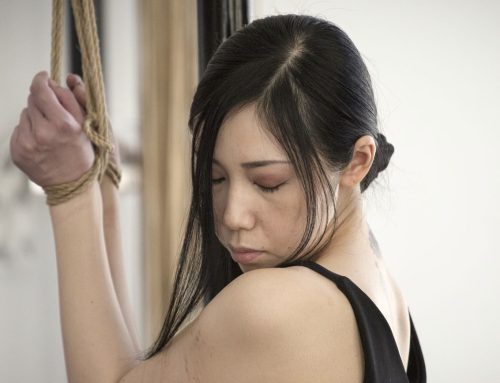
It begins with the person being tied.
The rope is not the subject. The interaction is.
This is why the style is often described as “model-centric.” But that phrase can feel abstract until you experience it. In practice, it means that every movement of the rope is a response to what is happening in the body and mind of the person receiving it.
Not later. Not after the tie is complete.
In real time.
Rope as Communication, Not Control
In many systems, rope is used to control position.
In Yukimura-style work, rope is used to communicate.
That communication can take many forms:
- Invitation
- Teasing
- Pressure
- Denial
- Reassurance
The rope becomes a language. Not a set of instructions, but a conversation.
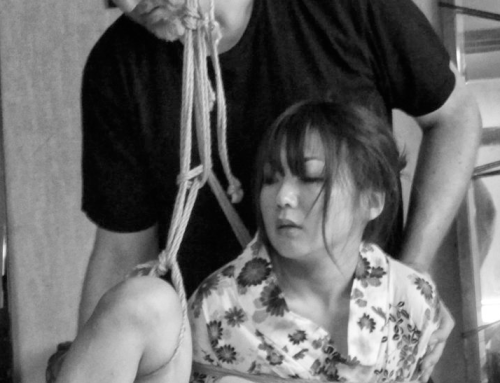
This is why a simple hands-in-front tie can feel more intense than a complex back tie. The complexity is not in the structure. It is in the exchange.
The Role of Resistance
One of the most misunderstood aspects of Yukimura-style shibari is resistance.
In technique-driven approaches, resistance is often treated as a problem to solve:
- Adjust the rope
- Improve the tie
- Increase control
Here, resistance is something else.
It is material.
It gives shape to the interaction. It creates tension, both physical and emotional. It allows the person tying to respond, adapt, and engage rather than simply execute.
Without resistance, the rope becomes mechanical.
With it, the rope becomes alive.
Shame, Awareness, and Exposure
Another key difference is the role of vulnerability.
Yukimura-style shibari often emphasizes states of awareness that are subtle but powerful:
- Being seen
- Being positioned
- Being exposed
These are not imposed through force. They are revealed through careful pacing, distance, and attention.
The rope does not create these feelings on its own.
It uncovers them.
This is why small adjustments can have a disproportionate impact. A shift in posture, a pause before tightening, a change in distance. These are not technical details. They are emotional levers.
Why Simplicity Feels More Intense
To someone used to more complex rope, Yukimura-style work can initially appear simple.
Fewer wraps. Fewer patterns. Fewer structural elements.
But that simplicity is deceptive.
When the focus shifts from “what is being tied” to “what is happening between two people,” complexity reappears in a different form. It moves from the rope into the interaction.
This is why beginners often find this style unexpectedly challenging.
There is nowhere to hide inside technique.
Why This Matters for Your Rope
Understanding this approach changes how you tie, regardless of style.
It shifts your priorities:
- From finishing ties → to observing reactions
- From executing patterns → to creating moments
- From control → to exchange
Even if you continue to use structured ties like gote or partial suspensions, the intention behind them changes. The rope becomes less about achieving a position and more about what that position does to the person inside it.
Experiencing It Directly
This is not something that can be fully understood through reading.
It has to be felt.
The timing. The pauses. The way a small movement can change the entire dynamic of a scene.
If you’re in Los Angeles and want to explore this approach firsthand, our classes at LA Rope Dojo focus on these exact principles. From beginner sessions with hands-in-front ties to more advanced work, the goal is always the same:
To move beyond technique, and into communication.
Final Thought
Yukimura-style shibari is not defined by specific ties.
It is defined by how you use them.
And once you begin to see rope this way, it becomes very difficult to go back to tying without listening.


Leave A Comment